Blue gum is the primary source of eucalyptus oil, which is used for everything from medicine to insecticide, fragrance, flavoring, and fuel. The medicinal properties of eucalypts were first recognized by the Australian Aboriginals.
Blue Gum Leaves — Australian Native Eucalyptus globulus
Blue Gum (Eucalyptus globulus) is one of the most iconic and commercially significant of all Australian eucalypts — a tall, fast-growing tree native to south-eastern Australia and Tasmania, and the primary commercial source of eucalyptus oil globally. The leaves contain exceptionally high concentrations of 1,8-cineole (eucalyptol) — the sharp, clean, intensely camphorous essential oil compound that gives eucalyptus its immediately recognisable aroma and that is extracted at commercial scale for use in fragrance, flavouring, personal care, and aromatherapy applications worldwide. The aromatic properties of eucalyptus leaves were well-known to Aboriginal peoples of south-eastern Australia long before European settlement, and the plant has been a defining element of the Australian botanical landscape for Aboriginal communities of the region for thousands of years.
Sold as a dried aromatic botanical. Available in 50g. This product is a botanical herb and is not intended to diagnose, treat, cure, or prevent any disease. Always consult a healthcare professional before use. Due to its high essential oil content, use is not recommended during pregnancy or for children under two years of age without professional guidance.
Product Specifications
BotanicalEucalyptus globulus
Common NameBlue Gum; Tasmanian Blue Gum; Southern Blue Gum
OriginAustralia — south-eastern Australia and Tasmania
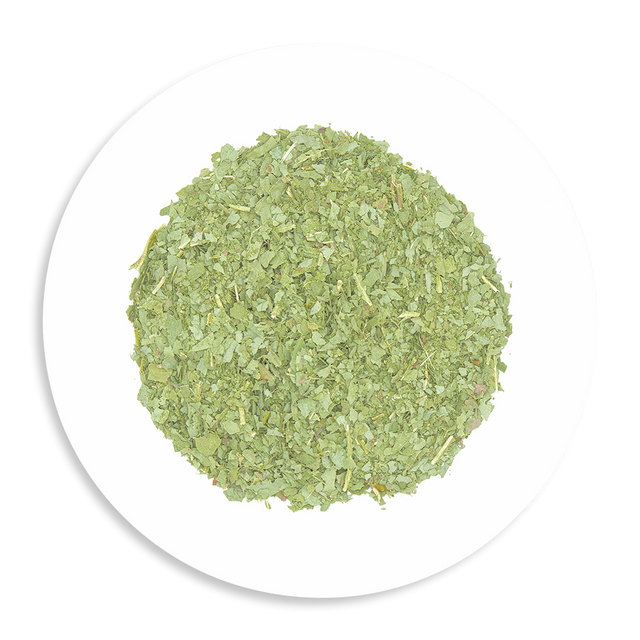
AppearanceDried leaves — intensely aromatic, sharp eucalyptus character
Size50g
CautionHigh essential oil content — not recommended during pregnancy or for children under 2 without professional guidance. Use sparingly.
StorageBelow 23°C in a dark, dry, airtight container
Blue Gum Leaves — FAQs
Everything you need to know before you order.
Blue Gum (Eucalyptus globulus) is a large native Australian tree from the family Myrtaceae, native primarily to south-eastern Australia and Tasmania. It is the single most commercially important eucalyptus species in the world — the primary source of commercial eucalyptus oil, which is distilled from its leaves at industrial scale across Australia, China, Portugal, Spain, and South Africa. The aroma comes from 1,8-cineole (eucalyptol), a cyclic ether that typically comprises 70–85% of the leaf's essential oil content. Cineole has one of the most immediately recognisable aromas in the plant kingdom — clean, sharp, intensely camphorous and cooling — and is the compound used in a wide range of commercial fragrance, flavouring, personal care, and aromatherapy applications globally.
Eucalyptus species — of which there are over 700, almost all endemic to Australia — have been central to the lives of Aboriginal peoples across the continent for tens of thousands of years. The aromatic properties of eucalyptus leaves were well-established in the traditional knowledge systems of the Aboriginal peoples of south-eastern Australia long before European settlement, and different species were used across different language groups for a wide range of traditional purposes. Eucalyptus globulus specifically is native to the country of the Palawa people of Tasmania and coastal peoples of south-eastern Victoria, for whom it was one of the defining plants of the landscape. The plant's significance to European colonists came rapidly after settlement — eucalyptus oil was being commercially distilled in Victoria by the 1850s.
Blue Gum dried leaves are used primarily as an aromatic botanical. Steam inhalation: place a small handful of leaves in a bowl of freshly boiled water — the steam releases cineole-rich vapour from the leaves. Aromatic infusion: steep a few leaves briefly in hot water as a strongly aromatic herbal tea — the flavour is intensely medicinal and camphorous; blending with peppermint or honey softens the intensity. Fragrance and crafting: incorporated into potpourri, dried botanical arrangements, and natural aromatic products. Distillery botanical: used in small quantities in craft gin production for its sharp, clean cineole note. Use all applications sparingly — the essential oil content is high and the aromatic impact is significant.
Yes. Because of its exceptionally high essential oil content, Blue Gum is a potent botanical and should be used with care. It is not recommended during pregnancy and should be avoided for children under two years of age without professional guidance — cineole can be problematic for very young children at certain concentrations. Always use sparingly and in well-ventilated spaces. As with all botanical herbs, consult a qualified healthcare professional before use, particularly if you are pregnant, breastfeeding, or taking medication.
Blue Gum dried leaves are currently available in a 50g size. For wholesale pricing or larger quantity enquiries, please contact our office directly at sales@herbalconnection.com.au or call (07) 5451 8780. We ship Australia-wide from our Gold Coast warehouse.
About
Strawberry Gum - Flaked is a uniquely Australian native ingredient, known for its sweet, fruity flavour that adds a distinctive touch to both sweet and savoury dishes. While it can be a...
Emu Bush (Eremophila alternifolia) has a stunning delicate, herbal and earthy taste. It has been used traditionally to assist with sleep and has a calming effect. Emu Bush has been valued for both,...
Acronychia acidula, commonly known as lemon aspen or lemon wood, is a species of small to medium-sized rainforest tree that is endemic to Queensland. It has simple, elliptical leaves, small groups of...
Finger Lime is a native citrus prized for its unique caviar-like pulp and attractive colour, which can vary between yellow, green, pale pink and crimson. Finger Lime trees were traditionally...