
How to Use Mullein: Tea, Blends & Preparation Guide | The Herbal Connection
Posted by Renae Colbert on 14th Jul 2026
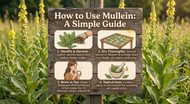
How to Use Mullein: A Simple Guide
If you've come across mullein in a herbal blend, on a market shelf, or growing wild along a roadside with its tall, fuzzy leaves and yellow flower spikes, you might be wondering exactly what to do with it. Mullein (Verbascum thapsus) has a long history in traditional herbal practice across Europe, and it's become a popular addition to modern pantries and tea cupboards. Here's a practical rundown of the most common ways people use it.
What Is Mullein?
Mullein is a biennial plant recognisable by its soft, felted leaves and towering flower stalk. Both the leaves and flowers are dried and used in various preparations. It has a mild, slightly earthy flavour, which makes it easy to blend with other herbs.
Mullein Tea
The most popular way to use mullein is as a simple infusion:
- Add 1–2 teaspoons of dried mullein leaf (or a mix of leaf and flower) to a cup.
- Pour over freshly boiled water and cover.
- Steep for 10–15 minutes. Mullein leaves have fine hairs that can be slightly irritating if not filtered well, so strain through a fine mesh, muslin cloth, or coffee filter before drinking.
- Enjoy on its own or blended with other herbs like lemon myrtle, chamomile, or peppermint for extra flavour.
You can find our organic mullein herb here: Mullein Herb Organic
How Often to Use It
Because it's such a gentle herb, mullein is commonly enjoyed as a daily or semi-regular cuppa rather than something with strict dosing guidelines. A typical approach is 1–2 teaspoons per cup, once or twice a day. If it's your first time trying it, start with once a day for a few days and see how you find it.
Adding Mullein to Your Morning Black Tea
Mullein's mild, slightly earthy flavour blends nicely with black tea and doesn't fight against its stronger, tannic taste. If you'd like to add it to your morning cup:
- Ratio: roughly 1 part mullein to 2–3 parts black tea, adjusted to your taste
- Steep time: black tea usually wants a shorter steep (3–5 minutes) than mullein on its own (10–15 minutes), so when blending them in the same pot, aim for a middle ground of around 5–7 minutes
- Straining: always strain thoroughly, whether brewed alone or blended, to filter out mullein's fine leaf hairs
- To finish: a splash of milk or a touch of honey works well if you'd like to soften the earthiness further
Mullein Flower Oil
Mullein flowers are often infused into oil, a preparation with a long history in home herbalism:
- Fill a clean glass jar loosely with dried mullein flowers.
- Cover completely with a carrier oil such as olive oil.
- Seal and leave in a warm, sunny spot for 2–4 weeks, shaking occasionally.
- Strain through a cloth and store the infused oil in a dark glass bottle.
Mullein Tincture
For those who prefer a concentrated liquid extract, mullein can be made into a tincture using dried leaf or flower steeped in alcohol over several weeks, then strained. Tinctures are typically taken in small drop doses diluted in water.
Smoking Blends
Historically, dried mullein leaf has been used as a base in traditional herbal smoking blends thanks to its mild, smooth-burning quality. It's often combined with other dried botanicals for this purpose.
A Few Practical Tips
- Sourcing matters. Look for mullein that's been properly dried and stored to preserve its colour and aroma.
- Filter well. Whatever preparation you choose, straining thoroughly removes the fine leaf hairs that can otherwise be irritating.
- Start small. As with any new herb, try a small amount first and see how you go.
- Talk to a professional. If you're pregnant, breastfeeding, taking medication, or managing a health condition, it's worth having a chat with your doctor, pharmacist, or a qualified naturopath before adding a new herb into your routine.
Final Thoughts
Mullein is a versatile, gentle herb that lends itself to tea blends, infused oils, and traditional preparations alike. Whether you're steeping a simple cup or infusing a batch of oil, it's an easy herb to start experimenting with in your home apothecary.