
Organic Herb Advantages Every Health Business Should Know
Posted by Renae Colbert on 23rd Jul 2026
Organic Herb Advantages Every Health Business Should Know
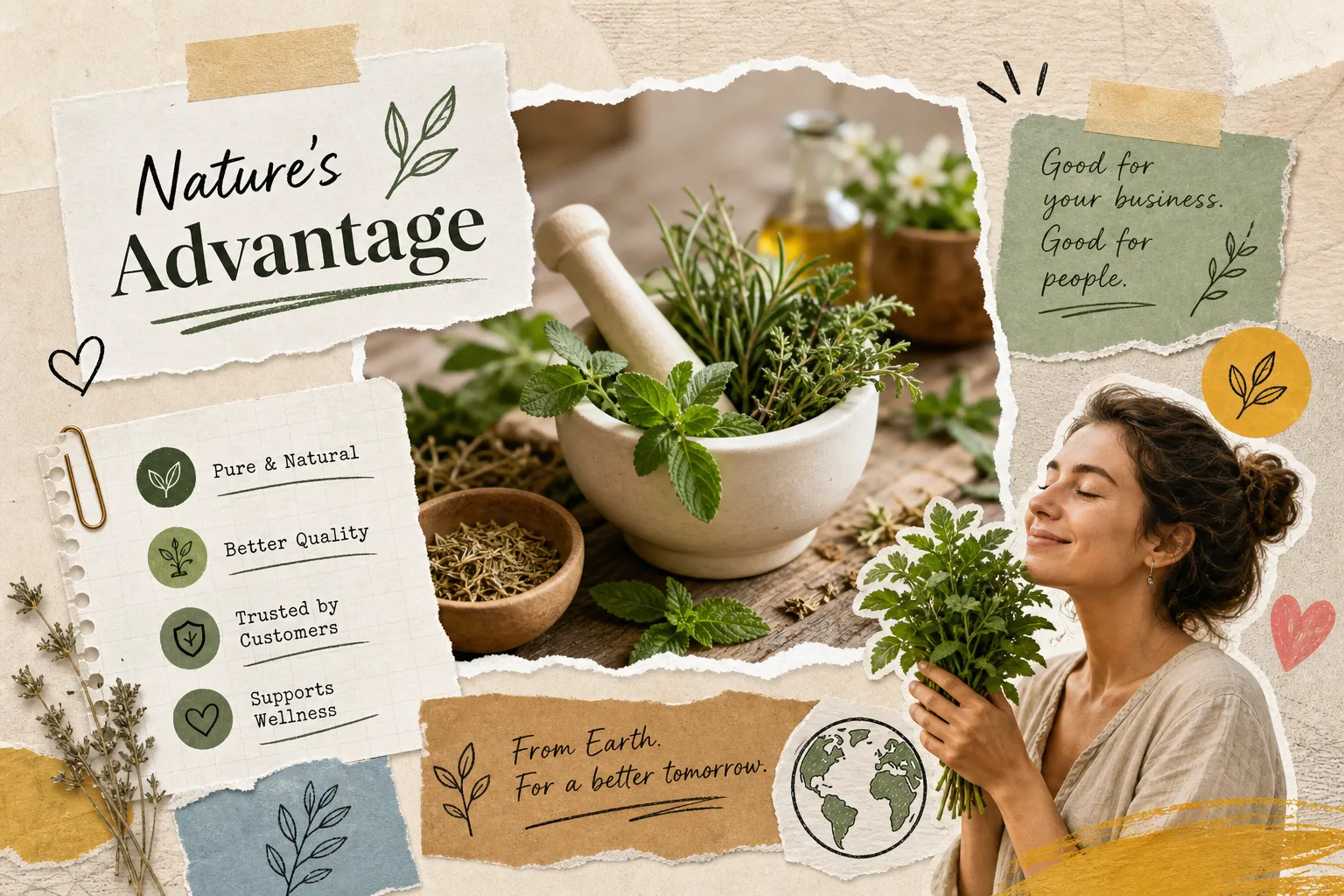
Organic herb advantages matter for health businesses across Australia, from substantially reduced pesticide residue risk to higher phytochemical levels that support genuine therapeutic value. Whether you're a naturopath formulating a tincture, a food manufacturer scaling a botanical blend, or a café building a signature tea range, the sourcing decision matters far more than most people realise. The advantages of certified organic herbs aren't limited to avoiding pesticides; they span nutritional quality, regulatory compliance, supplier traceability, and the story your brand gets to tell its customers.
The challenge is that not all herbs labelled "organic" carry the same assurance. The word is largely unregulated for domestic Australian sales, which means the gap between a genuine certified organic product and a marketing claim can be significant. Suppliers like Herbal Connection have built their entire wholesale operation around certified organic, HACCP-verified botanicals precisely because their B2B clients can't afford ambiguity in their supply chain. This article lays out the evidence-based case for choosing certified organic herbs, what the research actually shows, and how to make informed sourcing decisions at scale.
What "organic" really means for herbs (beyond the label)
Certified organic is a fundamentally different claim from the word "organic" used as a marketing term. A grower can choose not to spray and still legally call their herbs "organic" on a local market stall or invoice, because the term carries no mandatory verification requirement for domestic Australian sales. Certified organic, by contrast, requires third-party verification against a recognised standard, either the National Standard for Organic and Bio-Dynamic Produce (for export) or a voluntary domestic standard such as AS 6000-2015. Knowing the difference between a claim and a credential is the first thing any serious buyer needs to get right.
In practice, certification is issued through one of Australia's recognised private certifying bodies, including ACO Certification Ltd, Bio-Dynamic Research Institute, Organic Food Chain, and Southern Cross Certified Australia. Producers apply, undergo compliance audits, and must maintain records of inputs, soil management, and crop rotation. The certifier verifies that synthetic pesticides, herbicides, and soluble synthetic fertilisers are absent from the farming system, not just from the final product. For export markets, the framework is administered by the Department of Agriculture, Fisheries and Forestry (DAFF), and DAFF-approved certifying bodies manage that process across both domestic and export certification.
For buyers, the practical takeaway is straightforward: ask for a current certificate, confirm the certifying body is on the approved list, and verify that the scope covers the specific herb or botanical you're purchasing. A supplier who can't produce that documentation promptly is one worth reconsidering. These verification steps are not administrative formalities, they're the foundation of a defensible sourcing decision.
Organic herb advantages: pesticide risk and supply chain integrity
Australian testing of conventional culinary herbs found pesticide residues in 59% of samples overall. More striking, 46% of thyme samples and 10% of oregano samples exceeded maximum residue limits. These findings reflect frequent pesticide detections across some commercial herb commodities, not fringe cases. Multiple residues were found in single herb samples, which raises real questions about cumulative exposure that single-substance risk assessments don't fully address.
The contrast with certified organic produce is significant. A Victorian Government survey of certified organic produce found that more than 99% of samples had no detectable contamination at all. Only 2 of 300 samples showed any residue, both at very low levels and both attributed to environmental drift rather than direct pesticide application. While that survey covered produce broadly rather than herbs specifically, it illustrates the meaningful gap in contamination risk between the two production systems.
For businesses formulating health products, that gap has direct implications for product safety, label claims, and consumer trust. When your finished product is intended to support wellbeing, an ingredient base that introduces synthetic chemical exposure works against your core value proposition. Choosing certified organic herbs substantially reduces that risk at the source, rather than relying solely on post-harvest testing to catch problems after the fact.
Nutritional integrity: what peer-reviewed research actually shows
The research consistently points in the same direction: organic herb samples show higher total phenolics, flavonoids, carotenoids, and antioxidant activity compared with conventionally grown equivalents. Across multiple peer-reviewed studies of medicinal herbs, statistical significance has been reported in favour of organic samples, with the finding that conventional herbs may show higher chlorophyll content but lower levels of the bioactive compounds most relevant to health formulation. The exact magnitude varies by herb, compound, and growing conditions, but the direction of benefit is consistent across species.
For basil specifically, studies report that organic samples showed antioxidant activity roughly 17 to 43% higher than conventional samples, depending on the assay method used. Holy basil (tulsi) carries particular clinical weight: one randomised trial of 158 participants found that 1,200 mg per day of holy basil extract was 39% more effective than placebo for improving general stress symptoms over six weeks. A clinical review covering at least 34 trials on tulsi species identified benefits across metabolic, mental, immune, oral, and skin outcomes. While phytochemical levels and clinical outcomes are distinct measures, organic cultivation's role in preserving secondary metabolite integrity is a meaningful input quality consideration for product formulators.
Rosemary also appears in cognition-related research, though direct organic-versus-conventional comparisons for this herb remain limited in the published literature. The consistent finding across species is that organic farming systems tend to preserve and, in some cases, enhance the secondary metabolites that make medicinal herbs valuable in formulation. For product developers, that represents a genuine input quality difference, not simply a sourcing preference.
Regulatory and label advantages for health product businesses
Health businesses operating in Australia, particularly those making therapeutic goods claims, face scrutiny over ingredient sourcing. Using certified organic herbs provides documented evidence of farming inputs, processing conditions, and chain of custody. This matters for TGA-listed products and FSANZ-regulated foods alike, where substantiating an organic claim isn't optional. A supplier certificate from a recognised certifying body is the clearest way to satisfy both internal quality assurance and external regulatory review.
Under Australian food law, a business making an organic claim must be able to prove it. If the label says "certified organic," the certification must be genuine and verifiable. The TGA's requirements for therapeutic goods take this further: ingredient claims must not be misleading, and traceability to a certified primary source is part of responsible ingredient management. The practical risk of getting this wrong, through a recall, an ACCC investigation, or a failed audit, is significant enough that documentation should never be treated as a formality.
For product formulators and R&D teams, traceability is not a nice-to-have; it is a liability management tool. If a batch is recalled or a residue is detected post-market, the ability to trace the ingredient back to a specific lot, grower, and certifier makes all the difference. Organic certification frameworks require documentation at every step of the supply chain. When that's paired with HACCP certification at the supplier level, the audit trail holds up under regulatory scrutiny and gives buyers confidence that what's on the label reflects what's in the product.
Environmental and ethical benefits that strengthen your brand story
Organic farming systems show meaningful advantages over conventional production across several environmental measures. Meta-analyses comparing farming systems report that organic farms support substantially higher species diversity and pollinator populations than conventional equivalents, one widely cited analysis identified 34% more species and 50% higher pollinator diversity in favour of organic systems. Soil health improvements are also well documented: organic systems build organic matter, improve water retention, increase biological activity, and reduce erosion. For businesses that communicate sustainability credentials to their customers, sourcing from certified organic herb farms represents a verifiable claim rather than a vague aspiration.
There's also a farmworker dimension that most sourcing discussions overlook. Conventional herb growing may involve synthetic pesticide applications that increase worker exposure risk as a normal part of production. Organic certification substantially limits that exposure by prohibiting synthetic inputs at the farm level. A review specifically examining organic medicinal plant production identified reduced pesticide exposure risk for growers as one of the key benefits of organic systems. For health businesses that align their brand with ethical sourcing, this is a credible and increasingly important part of the story they tell customers, stockists, and auditors.
Consumers and wholesale buyers alike are paying closer attention to where ingredients come from and the conditions under which they're produced. Organic certification gives you documented evidence that your supply chain reflects your values, not just your marketing copy.
How to source verified organic herbs for your business
HACCP certification adds a second layer of assurance that complements organic certification. HACCP means a supplier has identified, documented, and actively manages every biological, chemical, and physical risk in their processing and handling environment. When an organic herb supplier also holds HACCP certification, buyers get two forms of assurance: that the crop was grown without prohibited inputs, and that the product was handled safely from receipt through to dispatch. For food manufacturers and health product formulators, this dual credential significantly simplifies due diligence and supports supplier audit requirements.
When evaluating a B2B organic herb supplier, look for current certification documentation, lot traceability, consistent batch profiles, and a team that can answer technical questions about sourcing provenance. Herbal Connection is an Australian wholesale supplier of HACCP-certified, certified organic herbs, spices, and teas, built specifically for buyers who require documented ingredient integrity. The business serves naturopaths, food manufacturers, distillers, and tea retailers, with bulk ordering options designed to suit different purchasing scales.
Sourcing from a supplier with verified credentials means less time spent on incoming quality checks and greater confidence in every product that goes to market. The right wholesale partner doesn't just supply ingredients, they become a working part of your quality system, with documentation that supports your compliance requirements at every stage.
The sourcing decision that protects your product and your reputation
The organic herb advantages covered in this article, substantially lower pesticide residue risk, higher antioxidant and phytochemical levels, stronger regulatory and label credibility, environmental benefits, and ethical sourcing credentials, only translate into real business value when the herbs are genuinely certified, not simply labelled organic. The distinction between a claim and a verified certification is what separates a compelling marketing story from a defensible sourcing decision.
Prioritising certified organic herb advantages in your ingredient sourcing protects product safety and brand reputation over the long term. If your business is ready to build its ingredient supply around certified organic herbs that come with full traceability and HACCP-certified handling, Herbal Connection is a practical starting point. The evidence for choosing organic is solid, and finding a wholesale supplier whose certification matches your standards is the logical next step, best taken before the next product launch rather than after.