
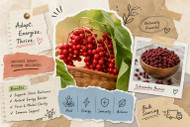
Schisandra Berries: Benefits, Uses & Bulk Sourcing
Posted by Renae Colbert on 26th Aug 2026
No other botanical in our dispensary catalogue stops people mid-conversation quite like schisandra. It's sour, sweet, bitter, pungent and salty, all at once, in a single dried berry. That five-flavour profile isn't just a curiosity; it's what makes Schisandra chinensis one of the most widely used adaptogens in Australian naturopathic practice. At Herbal Connection, we've seen growing interest in certified organic dried schisandra berries and schisandra powder from health practitioners building out their liver and stress protocols. If you're stocking a dispensary, formulating a product, or simply trying to understand whether schisandra belongs in your practice, this guide covers everything you need: the clinical evidence, the best product forms, safety considerations, and how to source it reliably in Australia.
What is the five-flavour berry and why does TCM value it so highly
Schisandra chinensis , known in Traditional Chinese Medicine as wuweizi, meaning "five-flavour fruit", has been used in Chinese herbal practice for over 2,000 years. The five flavours aren't incidental; in TCM theory, each taste corresponds to a specific organ system, and a herb that carries all five is considered to have unusually broad tonic action across the body. This is part of why wuweizi holds such a prominent place in the classical materia medica.
Its classification as an adaptogen, a botanical that supports the body's capacity to respond to physical and mental stress over time, connects its TCM heritage directly to modern integrative practice. The key difference between schisandra and other adaptogens is specificity: it has a strong affinity for liver function, which sets it apart in the dispensary.
The five tastes and what they mean in practice
In TCM, sour acts on the liver, sweet supports the spleen, bitter addresses the heart, pungent influences the lung, and salty relates to the kidney. A herb that covers all five is therefore seen as a systemic tonic rather than a single-organ remedy. For practitioners working within an integrative framework, this means wuweizi is often prescribed where multiple systems need support simultaneously, particularly liver and adrenal function, as well as kidney indications drawn from classical TCM theory.
How schisandra compares to other adaptogens
Where ashwagandha leans toward nervous system calming and rhodiola emphasises mental performance and energy, schisandra's strongest clinical signal sits firmly in hepatoprotection. That liver-specific affinity makes it the adaptogen practitioners reach for when a patient presents with elevated liver enzymes, medication burden, or a history of liver stress, contexts where rhodiola or ashwagandha wouldn't be the first choice. Think of schisandra as the liver-oriented adaptogen in a well-stocked herbal dispensary.
The clinical evidence behind schisandra's adaptogenic reputation
The research landscape for schisandra is honest and worth understanding clearly. Preclinical data, particularly from animal models, is strong and consistent. Human clinical evidence is smaller in volume and variable in quality, but meaningful enough to inform practice, especially for liver outcomes. Practitioners who want to justify use to patients or colleagues can do so confidently for liver support; for fatigue and stress, the evidence is real but preliminary.
Liver protection: the strongest clinical signal
The active compounds responsible for schisandra's hepatoprotective action are its lignans, particularly schisandrin and gomisin. A 2025 systematic review confirmed that Schisandra chinensis significantly reduced liver injury biomarkers, ALT, AST and ALP, in preclinical models, with large standardised effect sizes. Small human trials in hepatitis, drug-induced liver injury and nonalcoholic fatty liver disease have reported improved liver enzymes and symptom outcomes. One randomised human trial specifically assessed a schisandra fruit extract combined with sesamin and documented reductions in both ALT and AST in adults with borderline-elevated liver enzymes. The honest limitation is that most robust data remains preclinical, and human trials are characterised by small samples and methodological variation, but the directional evidence is consistent enough to warrant clinical use under appropriate supervision.
Stress, fatigue and the HPA axis
Schisandra's proposed mechanism for fatigue and stress involves modulation of cortisol and support for adrenal function via the HPA axis. Preliminary human trials suggest possible benefits in fatigue syndromes, but the evidence base is sparse: only a few trials exist, sample sizes are small, and no high-quality systematic review on fatigue outcomes had been published as of 2026. Practitioners typically use schisandra as part of a multi-herb adaptogen protocol rather than as a standalone fatigue remedy, which reflects the evidence accurately. It contributes to the protocol; it rarely carries it alone.
How naturopaths and herbalists use schisandra in wellness protocols
In Australian naturopathic practice, schisandra works best as a background tonic, a botanical that builds systemic resilience over weeks rather than producing acute, noticeable effects. This distinction matters for patient expectations and treatment planning. Adaptogenic support is commonly regarded by practitioners as requiring consistent use over four to twelve weeks before meaningful clinical changes become apparent.
Common clinical applications in Australian practice
Australian naturopaths most commonly reach for schisandra in four contexts. First, hepatoprotective support in patients with elevated liver enzymes or medication-related liver burden, where the evidence base is strongest. Second, adrenal fatigue and burnout, particularly in patients who present with long-term exhaustion. Third, menopausal symptom management, where its broad tonic action on liver systems aligns with TCM protocols for this life stage, though clinical trial data for this indication remains limited. Fourth, cognitive performance under stress, the application with the weakest evidence base, which should be communicated clearly to patients. Across all four contexts, schisandra tends to contribute more when it's part of a broader protocol rather than used as a single-herb intervention.
Combining schisandra with other botanicals
For liver protocols, schisandra pairs well with St Mary's thistle (silymarin) and dandelion root, combining hepatoprotective lignans with choleretic and antioxidant actions. For stress and fatigue protocols, it works alongside ashwagandha or rhodiola: rhodiola for morning energy and mental performance; schisandra for endurance and resilience; and ashwagandha in the evening for calming and sleep support. One important clinical consideration: schisandra inhibits CYP3A4 and affects P-glycoprotein transport, which means it can alter blood levels of certain pharmaceutical medications. Review the patient's full medication list before prescribing, particularly for those on immunosuppressants or anticoagulants.
Choosing the right form of schisandra berries: dried, powder, tincture or extract
Form selection matters as much as herb selection. The right product depends on the clinical goal, the patient's preference, and how you're structuring the protocol. Understanding the differences between forms helps you stock your dispensary with purpose rather than guesswork, and gets better outcomes for patients.
Dried schisandra berries and schisandra powder for everyday dispensary use
Whole dried schisandra berries are ideal for tea and decoction-based protocols. The classical TCM preparation involves simmering 3, 6 g in water for 20, 30 minutes, straining, and drinking as a daily tonic. This method suits patients who respond well to ritual-based medicine and appreciate a sensory connection to their treatment. Schisandra powder offers more flexibility: it blends into smoothies, can be encapsulated for patients who prefer capsules, and integrates readily into multi-ingredient formulations. Both forms preserve the full plant matrix. Storage is straightforward, keep them dry, sealed and away from heat and light, and you'll maintain quality for a reasonable shelf life.
Schisandra extract and tinctures for targeted clinical use
Standardised schisandra extract, measured by lignan content, is the form to reach for when clinical precision matters. Commercial supplements are typically standardised to between 1.5% and 10% total lignans, which allows reproducible dosing across batches, critical when you're monitoring patient outcomes over time. Tinctures offer convenience for liquid dispensing: a 1:5 tincture is more concentrated than a 1:10, so lower ratios mean stronger preparations. Alcohol-based tinctures have excellent shelf stability, often exceeding five years when stored correctly. For any patient where you're tracking liver enzyme changes or monitoring a specific therapeutic endpoint, standardised extract gives you the reliability that whole-plant forms can't match.
Safety, dosage and contraindications every practitioner should know
Schisandra is generally well tolerated at therapeutic doses, but there are genuine contraindications and drug interactions that every prescribing practitioner must screen for. This isn't a reason to avoid the herb; it's standard due diligence for any pharmacologically active botanical.
Dosage benchmarks for clinical practice
Standard practitioner reference doses are: 1, 6 g of dried berry per day in decoction or capsule form; 1, 3 mL of a 1:5 tincture daily; and standardised extracts dosed according to lignan content as specified on the product. The classical TCM benchmark of 3, 6 g in decoction aligns well with the lower end of the clinical dosing range used in modern trials. Always calibrate the dose to the indication and the individual patient, and cross-reference with a current herbal materia medica before prescribing.
Common side effects include heartburn, stomach upset, decreased appetite, itching and skin rash. Contraindications include pregnancy (schisandra may act as a uterine stimulant), breastfeeding (insufficient safety data), and active GERD or peptic ulcer conditions, where it may exacerbate reflux symptoms.
Drug interactions practitioners must screen for
The most clinically significant interactions involve CYP3A4 and CYP3A5 inhibition, which can elevate blood levels of tacrolimus, cyclosporine and sildenafil. Documented cases of increased tacrolimus exposure in transplant patients make this interaction a priority screen for any patient on immunosuppressants. P-glycoprotein inhibition adds a further layer of interaction risk for drugs that rely on P-gp efflux. Warfarin presents a different concern: schisandra appears to induce warfarin metabolism, potentially reducing anticoagulant effectiveness rather than enhancing it. For any patient on chronic pharmaceutical medications, complete a full interaction review before adding schisandra to the protocol, a step already worth building into your standard prescribing process.
Sourcing certified organic schisandra berries in bulk for your practice
For health practitioners, the quality of the botanical is inseparable from the quality of the clinical outcome. A well-designed protocol built on poorly sourced or inadequately certified ingredients is undermined at the foundation. When you're evaluating bulk schisandra suppliers, there's a clear checklist that should guide your decision.
What certifications matter when buying bulk botanicals
Certified organic status is non-negotiable for practitioners whose patients rely on clean-label products free from synthetic pesticide residues. HACCP certification confirms that food safety hazards are identified and controlled throughout the supply chain. Batch traceability gives you the ability to verify exactly what's in the product your patients are consuming. Eco-friendly packaging is an increasingly important consideration as both practitioners and consumers align their purchasing with sustainability values. Any supplier you work with should be able to provide documentation for all of these without hesitation.
Why Herbal Connection is a trusted source for Australian practitioners
Herbal Connection is a family-owned Australian wholesale supplier offering certified organic and HACCP-certified schisandra in both dried berry and powder forms. Our biodegradable bulk packaging reflects a genuine commitment to sustainability that aligns with the values of eco-conscious practices. We offer tiered bulk ordering discounts to make it practical to maintain consistent stock, contact us directly for current pricing and discount thresholds. We've built our reputation on personalised B2B service for health practitioners, naturopaths and dispensaries across Australia, and our sourcing documentation is available on request. When you need reliable stock, transparent sourcing and a supplier who understands your clinical context, we're set up to support your needs.
Making schisandra berries work for your practice
Schisandra berries sit in a genuinely compelling position in the modern dispensary. Their 2,000-year TCM heritage gives them deep clinical context, the emerging evidence base for liver function provides a meaningful foundation for contemporary use, and their versatility across product forms makes them practical to dispense in multiple ways. The five-flavour berry isn't a trend; it's a well-grounded botanical that rewards practitioners who understand how to use it well.
What separates a reliable schisandra protocol from an unreliable one is product form, dosing precision and supplier quality. Get those right, and the herb does its job. If you're ready to stock certified organic schisandra berries for your clinic or dispensary, contact the team at Herbal Connection to discuss bulk ordering options. We're here to support your sourcing.