
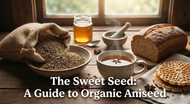
The Sweet Seed: A Guide to Organic Aniseed
Posted by Reese Colbert on 16th Dec 2025
The Sweet Seed: A Guide to Organic Aniseed
It is the flavor of Ouzo, Sambuca, and black jelly beans. It’s a favourite of bakers and herbalists alike. But is it the same as Star Anise? We explore the sweet, digestive world of the humble Aniseed.
Introduction: The Flavour of History
Aniseed (*Pimpinella anisum*) is one of the oldest spices known to humanity. Ancient Romans used it in a special cake called *mustaceus*, eaten at the end of feasts to prevent indigestion—a tradition that eventually evolved into the modern wedding cake!
Known for its distinct licorice sweetness, Aniseed is a staple in both the kitchen and the medicine cabinet. Our Organic Aniseed Whole brings this ancient tradition to your pantry. In this guide, we'll clear up the confusion between Anise and Star Anise, and show you how to use this sweet seed for digestion and baking.
Chapter 1: Aniseed vs. Star Anise (The Big Confusion)
This is the most common question we get. Both spices contain *anethole*, the compound that gives them that licorice taste, but they are completely different plants.
- Aniseed (This Product): Small, crescent-shaped brown seeds from a flowering bush related to parsley and fennel. The flavour is sweet, aromatic, and mild.
- Star Anise: Large, star-shaped woody pods from an evergreen tree. The flavour is much stronger, more pungent, and slightly bitter.
Think of Aniseed as the gentle, sweet cousin, and Star Anise as the intense, spicy cousin. While they can sometimes be swapped, Aniseed is generally better for baking and tea, while Star Anise is better for heavy stews and broths (like Pho).
Chapter 2: The "Carminative" Power
In herbalism, Aniseed is classed as a **carminative**. This is a fancy way of saying it helps to move gas through the digestive tract.
Because the seeds are rich in volatile oils, they help to relax the smooth muscles of the gut. This makes Aniseed tea an excellent choice for:
- After-dinner bloating.
- Settling an upset stomach.
- Reducing gas.
It is also traditionally used to support respiratory health, often found in cough syrups to help clear congestion.
Chapter 3: Culinary Uses (Beyond Tea)
While we love it as a tea, Aniseed is a hero in the kitchen.
1. Baking: It pairs beautifully with rye flour and honey. Try adding a teaspoon of whole seeds to your next loaf of bread or batch of ginger biscuits. It is the key ingredient in Italian *Pizzelle* cookies.
2. Fruit Poaching: Add a teaspoon of aniseed to the syrup when poaching pears or plums. The licorice flavour highlights the natural sweetness of the fruit.
3. Curry & Stew: A pinch of aniseed adds a subtle, sweet depth to rich meat stews or vegetable curries, balancing out spicy heat.
Chapter 4: How to Brew the Perfect Anise Tea
To get the most benefit (and flavour) from the hard seeds, you need to wake them up.
- Crush: Take 1 teaspoon of Organic Aniseed and lightly crush them with the back of a spoon or a mortar and pestle. You don't need powder, just crack the shells.
- Steep: Pour over boiling water.
- Cover: This is crucial! Cover your cup to trap the volatile essential oils so they don't evaporate.
- Wait: Steep for 5-10 minutes.
- Enjoy: Strain and drink. It is naturally sweet, so you likely won't need sugar.
Conclusion: Small Seed, Big Impact
Whether you are looking to soothe a rumbly tummy after a big meal, bake a traditional rye loaf, or simply enjoy the sweet, comforting taste of licorice, Organic Aniseed is a versatile pantry essential. It's a gentle, natural way to add flavour and wellness to your day.
Ready to try this sweet seed? You can find our premium Organic Aniseed Whole here.
Disclaimer: This information is for educational purposes only and is not intended to diagnose, treat, cure, or prevent any disease. This product is sold as a food only.