
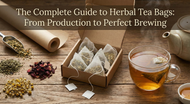
The Complete Guide to Herbal Tea Bags: From Production to Perfect Brewing
Posted by Reese Colbert on 23rd Jan 2026
The Complete Guide to Herbal Tea Bags
From traditional production to perfect brewing: discover how these convenient packages deliver nature's wellness in every cup.
Herbal tea bags represent one of the most accessible ways to enjoy the benefits of medicinal plants. From ancient herbal remedies to modern wellness routines, these small packages have revolutionized how we consume herbal teas, delivering centuries of traditional knowledge in every steep.
A Happy Accident: The History
The tea bag was invented accidentally in 1908 by American tea merchant Thomas Sullivan. He sent tea samples in small silk pouches to customers, who mistakenly steeped the entire pouch instead of emptying the contents. The convenience was an instant hit. Since then, materials have evolved from silk to gauze, paper, and now modern biodegradable fibers.
Production & Materials
Quality herbal tea bags require careful engineering. Unlike standard black tea, herbs vary wildly in size and texture.
? Bag Types Explained
- Traditional Paper: Made from wood pulp and natural fibers. Cost-effective and biodegradable.
- Mesh Bags: Nylon or silk mesh that offers superior water flow and extraction.
- Pyramid Bags: A modern innovation allowing herbs to expand fully, offering a loose-leaf quality brew.
- Biodegradable: The future standard, made from corn starch or plant cellulose.
Fascinating Fun Facts
The Science of Brewing
To get the most out of your herbal tea bag, temperature matters:
- Delicate flowers (Chamomile): 175-185°F (79-85°C)
- Robust leaves (Peppermint): 190-200°F (88-93°C)
- Roots & Barks (Ginger): 200-212°F (93-100°C)
Pro Tip: Always cover your cup while steeping. This prevents essential oils (the aromatic medicinal compounds) from evaporating with the steam.
? Traditional Evening Wellness Blend
Create your own custom tea bags with this soothing formula.
Ingredients (Ratios)
- 2 parts Dried Chamomile Flowers
- 1 part Dried Lavender Buds
- 1 part Dried Lemon Balm Leaves
- 1/2 part Dried Peppermint
- Empty fillable tea bags or mesh infuser
Instructions
- Mix: Combine all dried herbs in a bowl. Gently crush larger pieces to ensure even distribution.
- Fill: Place 1-2 teaspoons of the blend into each empty tea bag. Do not overfill; herbs need room to expand.
- Seal: Seal according to bag type (heat seal or tie).
- Brew: Pour 8 oz of hot water (185°F) over the bag. Cover and steep for 5-7 minutes.
- Enjoy: Sip 30 minutes before bed for optimal relaxation.
Quality & Sustainability
How to Spot Quality
Even inside a bag, quality matters. When you open a fresh package, the aroma should be vibrant and distinct. If you can see the herbs (in mesh or pyramid bags), they should have color, not look like grey dust. "Fannings" or "dust" grades are often used in cheap bags, while quality brands use "whole leaf" or "fine cut" herbs.
Environmental Impact
The industry is shifting toward sustainability. Look for brands that use:
- Unbleached bags: Free from chlorine processing.
- Staple-free: Bags tied with string or ultrasonic welding.
- Compostable materials: Plant-based plastics (PLA) rather than petroleum-based nylon.
Experience Premium Wellness
Ready to explore the world of botanical wellness? Discover our curated collection of premium herbal teas.
Shop Premium Herbal Teas