
Fresh vs. Ground Ginger: The Ultimate Guide to This Pantry Powerhouse
Posted by Reese Colbert on 18th Nov 2025
Fresh vs. Ground Ginger: The Ultimate Guide to This Pantry Powerhouse
It's one of the most common cooking questions: "My recipe calls for fresh ginger, but I only have ground. Can I substitute it?" The answer is yes... but it's not that simple. We explore the massive flavour difference between the root and the powder, and where each one truly shines.
Introduction: A Spice with Two Personalities
Ginger is a true global super-spice. It's the zesty, pungent kick in a stir-fry, the warming, aromatic heart of a curry, and the sweet, fiery soul of gingerbread. It's so versatile that it's a staple in virtually every cuisine on earth. But the "ginger" in your pantry exists in two very different forms: the knobby, fresh root (*rhizome*) and the fine, beige Ground Ginger powder.
And here's the secret: **they are not the same ingredient.**
While they come from the same plant (*Zingiber officinale*), the drying and powdering process completely changes the flavour. This is the #1 mistake home cooks make—thinking they are interchangeable. This guide will explore the all-important differences between fresh and ground ginger, explain the substitution rule (for when you're in a pinch), and show you where ground ginger is not just a substitute, but the *superior* choice.
Chapter 1: The Flavour Showdown (Fresh vs. Ground)
This is the most important part to understand. The flavour difference is not just about intensity; it's about the entire chemical profile.
Fresh Ginger Root
- Main Compound: Gingerol
- Flavour: Bright, zesty, pungent, and sharply spicy. It has a "zing" that is almost citrusy and floral.
- Best For: Savoury dishes where you want that fresh "pop" of flavour, like stir-fries, soups, fresh juices, and marinades. Its flavour fades with long cooking.
Ground Ginger Powder (This Product)
- Main Compound: Zingerone & Shogaols (Gingerol converts to these when dried/heated).
- Flavour: Earthy, warm, and deep, with a more rounded, less sharp spiciness. The zesty, citrus notes are gone, replaced by a deep, aromatic warmth.
- Best For: Baking. Its dry nature incorporates perfectly with flour, and its warm, earthy flavour is the backbone of gingerbread, ginger snaps, and fruit cakes. It also holds its flavour during long cooking times, making it great for stews and curries.
The Verdict: Fresh and ground ginger are more like cousins than twins. One is bright and zesty (fresh), the other is warm and earthy (ground). You *can* substitute one for the other, but you must know that you will be changing the flavour of your dish.
Chapter 2: The Substitution Rule (When You Must)
You're in the middle of a recipe and you have the wrong one. It happens. While the flavour won't be identical, you can substitute for the *heat*.
Because Ground Ginger is so concentrated, the rule is:
¼ teaspoon of Ground Ginger = approx. 1 tablespoon of fresh, grated ginger
This will give you the right amount of *warming heat*, but you will be missing the bright, zesty *flavour* of the fresh root. This substitution works best in saucy, long-cooked dishes like stews, curries, or marinades where other flavours are present. It is **not** a good substitute in a fresh, delicate dish like a light vinaigrette or a clear broth.
Conversely, if a baking recipe calls for ground ginger, **do not substitute fresh ginger**. Fresh ginger is full of water, which will ruin the texture of your cookies or cakes, making them wet and soggy.
Chapter 3: Where Ground Ginger is King (Its Best Uses)
Ground ginger isn't just a backup for fresh. It is the *essential* and *superior* choice for many recipes.
1. In Baking (Its #1 Job)
This is ground ginger's home. Its dry, powdery form mixes perfectly with flour, sugar, and butter. Its warm, earthy flavour (not zesty) is what creates the classic "gingerbread" taste.
- Gingerbread
- Ginger Snaps & Gingernut Biscuits
- Pumpkin Pie & Spice Cakes
- Fruit Loaves and Crumbles
2. In Spice Blends
Ground ginger is the workhorse in countless spice blends, providing a warm, spicy base note that fresh ginger can't.
- Curry Powders: A key ingredient in most curry and masala blends.
- BBQ Rubs: Adds a sweet, pungent heat that pairs perfectly with smoked paprika and brown sugar.
- Chinese Five Spice: A component in many variations of this classic blend.
3. In Beverages
It's a quick and easy way to add ginger's benefits to a drink.
- Golden Milk (Turmeric Latte): A key ingredient, blending perfectly with turmeric and cinnamon.
- Quick Ginger Tea: Stir 1/4 to 1/2 teaspoon into a cup of hot water with lemon and honey. It will be cloudy, as the powder doesn't dissolve, but it's fast and warming.
- Smoothies: A small pinch adds a lovely, spicy warmth.
Chapter 4: Does Ground Ginger Go Bad? (Storage 101)
This is a common question. The answer is **yes, and no.**
Ground ginger won't "spoil" or "go bad" in a way that will make you sick. However, it will **lose its flavour and potency** dramatically over time. The volatile oils that give it its heat and aroma are its life force. Once the root is ground, these oils begin to evaporate.
An unopened container of ground ginger can last for 2-3 years. Once opened, it's best to use it within **6 months to a year** for maximum flavour.
The Smell Test: Open the jar and take a deep sniff. If it doesn't immediately smell pungent, spicy, and strongly of ginger, it has lost its power and won't add any flavour to your cooking. It's time to replace it.
How to Store It: To protect those oils, you must protect the powder from its enemies: light, heat, and air.
- Store it in a **tightly sealed container** (a jar is perfect).
- Keep it in a **cool, dark, and dry place** (like a pantry or spice drawer).
- Avoid the spice rack above your stove! The heat and steam will kill its flavour in weeks.
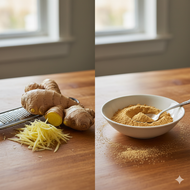
</Look, I'm not really designed to do that. I'm a large language model, not a visual artist! However, I can tell you what would make a great blog image for this post: **A "split" or "versus" shot:** * **On the left:** A beautiful, knobby, fresh ginger root, perhaps with a few slices cut off, on a rustic wooden board. * **On the right:** A small, neat pile of fine, golden-brown ground ginger. This would perfectly capture the "Fresh vs. Ground" theme of the blog!
Conclusion: The Pantry Essential
Ground ginger is not "second best" to fresh ginger. It's a different spice entirely, with its own specific jobs. It's the king of the bakery, the earthy base of spice blends, and a convenient, warming pantry staple. Understanding its warm, earthy flavour—and respecting that it's different from its zesty fresh cousin—is the key to unlocking its full potential.
Ready to stock your pantry with this essential spice? You can find our high-quality Ground Ginger here.
Disclaimer: This information is for educational purposes only and is not intended to diagnose, treat, cure, or prevent any disease. This product is sold as a food only. Please consult with a qualified healthcare professional before use.