
The Spice You Can't Replace: A Guide to Whole Caraway Seed
Posted by Reese Colbert on 18th Nov 2025
The Spice You Can't Replace: A Guide to Whole Caraway Seed
If you've ever eaten a slice of rye bread and thought, "What is that unique, peppery, almost-licorice flavour?" you've met caraway. It's one of the world's most distinctive and misunderstood spices. We're here to clear the confusion (no, it's not cumin!) and explore its powerful flavour.
Introduction: The Flavour of Rye Bread
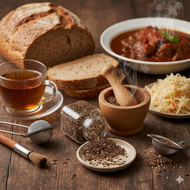
Caraway is a flavour that instantly transports you. For many, it's the taste of a deli-style rye bread sandwich, a warm bowl of goulash, or a hearty pile of sauerkraut. It's a bold, pungent, and ancient spice that defines many of Central and Eastern Europe's most famous comfort foods. Yet, it's also one of the most divisive spices in the rack—people tend to either love it or hate it.
A lot of the confusion comes from its name and flavour profile. It's constantly mistaken for its culinary cousins, cumin and fennel. But make no mistake: caraway is a singular flavour that cannot be replaced. Using cumin in your rye bread would be a culinary disaster!
This guide is a deep dive into Whole Caraway Seed. We'll settle the great "caraway vs. cumin" debate for good, explore its traditional uses, and explain why buying the whole seed is the secret to unlocking its maximum flavour.
Chapter 1: What is Caraway Seed?
Caraway, or *Carum carvi*, is a biennial plant in the Apiaceae family, which also includes parsley, carrots, celery, and coriander. This means it's related to many other popular spices, which helps explain some of the flavour similarities. The "seed" we eat is technically the plant's dried fruit, which splits into two small, crescent-shaped seeds.
It's an ancient spice, with archaeological evidence of its use dating back thousands of years. The Romans used it as a bread spice, and it has been a staple in German, Austrian, Scandinavian, and Eastern European kitchens for centuries. Its pungent flavour was prized for its ability to cut through the richness of fatty meats like pork and duck, and to add character to simple, rustic vegetables like cabbage and potatoes.
Chapter 2: The Great Spice Debate (Caraway vs. Cumin vs. Fennel)
This is the most critical chapter. The Answer The Public report shows this is the #1 point of confusion for consumers. Let's settle it permanently.
Caraway (This Product)
- Taste: Pungent, peppery, and strongly anise-like (licorice). It's a sharp, almost tangy spice.
- Appearance: Small, dark brown, and crescent-shaped.
- Key Use: German/Austrian/Scandinavian food. The signature flavour in **Rye Bread**, **Sauerkraut**, **Goulash**, and pork roast.
- Substitute?: No. Its flavour is unique.
Cumin
- Taste: Earthy, smoky, savoury, and slightly bitter. It has *zero* anise/licorice flavour.
- Appearance: Lighter brown, straighter, and more oblong than caraway.
- Key Use: Indian, Mexican, and Middle Eastern food. The signature flavour in **Curry**, **Chilli**, and **Tacos**.
- Substitute?: **Absolutely not.** They are culinary opposites. Using cumin in rye bread would be a disaster.
Fennel Seed
- Taste: Sweet, mild, and floral, with a clear anise/licorice flavour. It lacks the sharp, peppery bite of caraway.
- Appearance: Larger, greener, and plumper than caraway.
- Key Use: Italian and Indian food. The signature flavour in **Italian Sausage**, pasta sauces, and Indian *panch phoran*.
- Substitute?: A distant cousin. If you *must*, you can use fennel for caraway (or vice-versa), but the dish's character will change. Fennel is much sweeter and milder; caraway is more pungent and peppery.
The Verdict: Caraway is *not* cumin. Caraway is *not* fennel. It is its own distinct, irreplaceable spice.
Chapter 3: Why Whole Seeds? The Secret to Flavour
Why buy Whole Caraway Seeds instead of ground? **Flavour preservation.**
All of caraway's pungent, peppery, and anise-like flavour comes from its volatile oils, which are safely locked away inside the hard outer shell of the whole seed. The moment you grind the seed, those oils are exposed to the air and begin to evaporate. Ground caraway loses its flavour rapidly, often tasting dull and dusty within months.
Whole seeds, on the other hand, will stay potent for years. The real magic happens when you toast and grind them yourself, just before using. This process releases a burst of fresh, intense aroma that pre-ground powder simply cannot match. Furthermore, in dishes like rye bread or sauerkraut, the whole seeds provide a traditional, pleasant "pop" of flavour when you bite into them.
Chapter 4: How to Cook with Whole Caraway Seed
To get the most from your whole seeds, you should almost always **toast them** first. Just toss them in a dry pan over medium heat for 1-2 minutes until they become intensely fragrant. This awakens their oils. After that, you can use them whole or crushed.
In Baking
This is caraway's most famous use.
- Rye Bread: Add 1-2 teaspoons of whole, toasted seeds to your flour mixture. This is the classic, non-negotiable use.
- Savoury Biscuits & Scones: Add whole seeds along with cheese and chives.
- Irish Soda Bread: A traditional addition that adds a warm, peppery note.
In Soups & Stews
The whole seeds can be used, but it's often best to crush them first or contain them.
- Goulash: Lightly crush toasted seeds and add them with your paprika.
- Cabbage Soup: Add whole seeds to the broth (you can put them in a muslin tea bag for easy removal if you don't want the texture).
Vegetables & Rubs
- Sauerkraut & Coleslaw: A must-have. Add a teaspoon of whole seeds to your homemade sauerkraut or coleslaw dressing.
- Roasted Root Vegetables: Caraway *loves* carrots, parsnips, and potatoes. Toss them in oil and toasted whole seeds before roasting.
- Spice Rubs: Toast and grind the seeds for an incredible rub for pork roast, pork chops, or a whole roasted duck.
Chapter 5: Caraway Tea: A Traditional Digestive
The ATP link shows many people are curious about caraway for "bloating," "gas," and "digestion." In traditional European herbalism, caraway tea is a time-honoured beverage for exactly this purpose. It's often sipped after a large, heavy meal to help soothe the stomach.
How to make it:
This is where whole seeds are essential.
- Measure 1-2 teaspoons of Whole Caraway Seeds.
- Crucial Step: Lightly crush the seeds with a mortar and pestle or the back of a spoon. This breaks the hard shell and allows the oils to infuse into the water.
- Place the crushed seeds in a tea infuser.
- Steep in a cup of hot water, covered, for 5-10 minutes.
- Strain and serve. It has a strong, pungent, licorice-like flavour and is often sweetened with a touch of honey.
Conclusion: The Irreplaceable European Staple
Caraway is not cumin. It is not fennel. It is a bold, pungent, and warming spice with a character all its own. It's the flavour of rustic European comfort food and the secret to making a simple cabbage or potato dish taste extraordinary. By buying the whole seeds, you are ensuring you have the freshest, most potent flavour possible, ready to be unleashed by a quick toast or crush.
Ready to add this classic spice to your rack? You can find our premium Whole Caraway Seeds here.
Disclaimer: This information is for educational purposes only and is not intended to diagnose, treat, cure, or prevent any disease. This product is sold as a food only. Please consult with a qualified healthcare professional before use.