
Love-in-a-Mist in Your Kitchen: A Guide to *Nigella damascena* Seeds
Posted by Reese Colbert on 18th Nov 2025
Love-in-a-Mist in Your Kitchen: A Guide to *Nigella damascena* Seeds
You know it as a beautiful, wispy blue garden flower. But did you know its seeds hold a culinary secret? We explore the fruity, peppery flavour of 'Love-in-a-Mist' seeds and—crucially—how they differ from their famous cousin, 'Nigella sativa'.
Introduction: The Garden Flower with a Spicy Secret
For most gardeners, *Nigella damascena* is a beloved annual, cherished for its ethereal blue flowers, feathery foliage, and whimsical name: "Love-in-a-Mist." We grow it for its beauty in the garden and for its unique, papery seed pods in dried flower arrangements. What most of us *don't* know is that inside those pods is a culinary spice with a truly unique flavour.
This is where the confusion begins. Most people who cook with "Nigella" are using *Nigella sativa* (Kalonji/Black Seed). But the user who specifically requested this information knows there's a difference. *Nigella damascena* Seeds are a different spice entirely, with a different history and a completely different flavour profile.
This guide is a deep dive into the *other* Nigella. We'll clear up the great Nigella confusion, explore the surprising aroma of "Love-in-a-Mist," and teach you how to use this rare spice in your kitchen.
Chapter 1: The Great Nigella Confusion (Damascena vs. Sativa vs. Cumin)
This is the most critical clarification. The name "Black Cumin," which the user provided, is a tangle of multiple different plants. Let's unravel it.
1. *Nigella damascena* (This Product - "Love-in-a-Mist")
- Flavour Profile: Pungent, peppery, and intensely **fruity**. The aroma is often compared to strawberries, passionfruit, or a fine red wine.
- Primary Use: A rare culinary spice, mostly in desserts, sweet breads, fruit compotes, and as an aromatic pepper substitute.
2. *Nigella sativa* (Kalonji / Black Seed)
- Flavour Profile: Pungent, sharp, toasty, and slightly bitter, with notes of **oregano and onion**. It is *not* fruity.
- Primary Use: This is the "Nigella" you know. It's used on naan bread, in Indian *panch phoran* spice blends, pickles, and Middle Eastern cooking.
3. *Bunium persicum* (True Black Cumin)
- Flavour Profile: Earthy, pungent, and distinctly **cumin-like**, but sweeter and smokier than regular cumin.
- Primary Use: A true cumin relative, used in Northern Indian, Persian, and Central Asian cooking (often in *garam masala* or rice pilafs).
In short, the product you are reading about, *Nigella damascena*, is the fruity and peppery "Love-in-a-Mist" seed, **not** the oregano-like "Kalonji" or the earthy "Black Cumin."
Chapter 2: The Unique Flavour of "Love-in-a-Mist"
The first time you crush and smell *Nigella damascena* seeds, you'll be amazed. You expect a generic peppery or "black seed" smell. Instead, you're hit with a powerful, bright, fruity aroma. Why? The seed's essential oil is rich in an ester called *damascenine*, which is also found in some rums and has a distinct fruity, plummy note.
The full profile is:
- Aroma: Intensely fruity (strawberry, passionfruit, plum), floral, and warm.
- Taste: A strong peppery, pungent kick follows the aroma, with a slightly bitter, warm finish.
This dual "fruit-and-pepper" character makes it a fascinating ingredient, bridging the gap between sweet and spicy. It's this unique quality that makes it a secret weapon for bakers and dessert makers.
Chapter 3: How to Use *Nigella damascena* Seeds in the Kitchen
Because its flavour is so unique, *Nigella damascena* is best used where its fruity notes can shine. It is far more common in European baking than in savoury Indian cooking. Always use them in small quantities, as the flavour is potent.
Step 1: Always Crush or Grind!
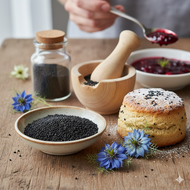
Like most whole spices, the flavour is locked inside. Lightly crack the seeds in a mortar and pestle just before using them to release their incredible aroma.
In Sweet Baking
- Breads & Biscuits: Sprinkle crushed seeds over sweet breads, scones, or shortbread biscuits before baking.
- Fruit Compotes: Add a tiny pinch of crushed seeds to a simmering berry or apple compote. It enhances the fruit flavour beautifully.
- Cakes & Puddings: Fold a small amount into the batter for an apple cake, or sprinkle it over a rice pudding or custard.
As a Pepper Substitute
You can use ground *Nigella damascena* as an aromatic substitute for black pepper, especially in dishes that benefit from a fruity lift.
- On Fruit: A classic pairing is to sprinkle it over fresh strawberries, just as you would black pepper.
- On Salads: Add to a vinaigrette for a peppery, fruity twist.
- On Cheese: Sprinkle over a soft goat's cheese or cream cheese.
Chapter 4: A Note on Safety
It's important to be precise. While the *seeds* of *Nigella damascena* are used as a food-grade spice in small culinary quantities, the rest of the "Love-in-a-Mist" plant (the feathery leaves, stems, etc.) is ornamental and considered mildly toxic, containing alkaloids. You should **never** eat the green parts of the plant.
Our Nigella Damascena Seeds are sold as a pure, food-grade culinary spice, intended for flavouring food in small amounts, just like any other potent spice.
Conclusion: A Spice Hiding in Plain Sight
*Nigella damascena* is the perfect example of a plant hiding its culinary talents in plain sight. It's not just a pretty flower; it's the source of a wonderfully complex and aromatic spice that deserves a place in every baker's pantry. Its unique strawberry-and-pepper profile provides a depth of flavour that its more common cousin, *Nigella sativa*, simply can't replicate.
If you're an adventurous cook looking for a new "secret ingredient" to make your desserts and baked goods stand out, this is it.
Ready to try this unique spice? You can find our Nigella Damascena (Love-in-a-Mist) Seeds here.
Disclaimer: This information is for educational purposes only and is not intended to diagnose, treat, cure, or prevent any disease. This product is sold as a food only. Use in small culinary amounts. Do not consume other parts of the plant. Please consult with a qualified healthcare professional before use.