
Licorice Root: The Ancient Sweetener and a Guide to Decoctions
Posted by Reese Colbert on 24th Sep 2025
Licorice Root: The Ancient Sweetener and a Guide to Decoctions
Long before the world knew processed sugar, nature provided its own powerful sweeteners, and few are as potent or as storied as Licorice Root. Known as the "sweet root," Glycyrrhiza glabra has been a cornerstone of traditional medicine and culinary arts for millennia, from the tombs of Egyptian pharaohs to the apothecaries of Traditional Chinese Medicine. Its profound, lingering sweetness is unmistakable.
While available in many forms, using the Cut & Sifted Licorice Root connects us to the most traditional way of enjoying this herb. Today, we'll explore the rich history of this botanical giant, learn the essential art of decoction to properly extract its flavour, and understand its vital role as the great "harmonizer" in the world of herbal teas.
A Sweetness 50 Times Stronger Than Sugar
The defining characteristic of licorice root is its intense sweetness. This is not due to sugars but to a unique compound called glycyrrhizin. This compound is remarkably potent, estimated to be 30 to 50 times sweeter than sucrose (table sugar). This is why a tiny amount of licorice root can profoundly sweeten a large pot of tea, and why it has been so valued throughout history as both a flavouring agent and a medicine.
However, it's crucial to distinguish this natural flavour from the commercial "black licorice" candy. While related, much of the candy on the market today is flavoured with anise oil, which provides a similar, but less complex, taste. True licorice root offers a more nuanced, earthy, and deeply satisfying sweetness that is entirely its own.
The Art of Decoction: How to Brew Tough Roots
When you want to make tea from delicate leaves or flowers, you make an infusion—you pour hot water over them and let them steep. But when working with tough, woody materials like roots, barks, and seeds, a more robust method is needed to extract their properties. This method is called a decoction.
Cut & Sifted Licorice Root is the perfect candidate for a decoction. The process involves gently simmering the herb to break down its tough cellular walls and release its flavour and compounds into the water.
How to Make a Licorice Root Decoction:
- Start Cold: Place 1-2 teaspoons of cut licorice root in a small saucepan. Add about 2 cups of cold, filtered water. Starting with cold water allows the herb to slowly hydrate and release its constituents more effectively.
- Bring to a Boil: Place the saucepan on the stove and bring the water to a boil.
- Simmer Gently: Once it's boiling, reduce the heat to low, cover the pot with a lid, and let it simmer gently. A good simmering time for licorice root is 10 to 15 minutes.
- Strain and Serve: Carefully strain the hot liquid through a fine-mesh sieve into your favourite mug.
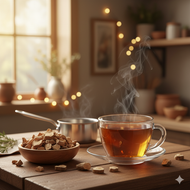
The resulting liquid will be a beautiful amber colour, intensely sweet, and deeply flavourful. This decoction can be enjoyed on its own or used as a sweet base for other teas.
The Great Harmonizer of Herbal Blends
In Traditional Chinese Medicine (TCM), licorice is considered a "guide" or "harmonizer" herb. It is included in countless formulas, often in small amounts. Its role is twofold: first, its powerful sweetness makes bitter or unpleasant-tasting herbs more palatable. Second, it is believed to synergize the effects of other herbs in a formula, bringing them together to work more effectively.
You can apply this principle to your own home tea blending. Have a herbal blend that you know is good for you but find too bitter to enjoy? Try adding a small amount of cut licorice root to the mix. It will not only sweeten the brew but also add a pleasant, soothing mouthfeel and a layer of flavour complexity. It pairs wonderfully with almost everything, from spicy chai blends to bitter digestive tonics.
A Crucial Note on Safety
While licorice root is a wonderful herb, it is potent and requires mindful use.
The same compound that makes it sweet, glycyrrhizin, can have significant effects on the body with excessive or long-term use. It can lead to increased blood pressure, potassium loss, and water retention. For this reason, licorice root should be enjoyed in moderation. It is not recommended for individuals with a history of hypertension, heart conditions, or kidney disease. Furthermore, it should be avoided during pregnancy and breastfeeding. As with any potent herb, it is always best to consult with a qualified healthcare professional before incorporating it into your routine, especially if you have pre-existing health conditions.
A Timeless Treasure for Your Pantry
Used with respect and awareness, Licorice Root is a timeless treasure. It offers a connection to ancient traditions and a way to bring natural, profound sweetness into our lives. Whether you are simmering a simple decoction to soothe your throat or adding a pinch to a complex herbal blend, the sweet root provides a flavour and a feeling that is both comforting and deeply satisfying.